Debris Fields
familyessayfilmHollywood makes two kinds of movies about drinking. In the first kind, the bottle is a costume, something an actor holds while delivering dialogue. In the second kind, which is rare, the bottle is the antagonist, and it wins every scene it appears in. Flight is the second kind. It may be the best film ever made about alcoholism, and almost nobody talks about it, because everyone remembers the plane crash and forgets that the plane crash is the least dangerous thing in the picture.
Denzel Washington plays Whip Whitaker, a pilot who inverts a failing airliner and lands it in a field, saving nearly everyone aboard. He performs this miracle drunk and high. The movie then does something American cinema almost never has the nerve to do. It refuses to let the heroism cancel the disease. The crash is over in twenty minutes. The drinking gets the other two hours.
The scene that tells you what kind of movie this is takes place in a hotel room. Whitaker is sober, sequestered, hours from the hearing that will decide his life. He opens the mini fridge. Rows of little bottles, lit like a shrine. He looks at them. He closes the door. The audience exhales. Then he opens it again. That second opening is the whole movie. Anyone can close the door once. The disease lives in the reopening.
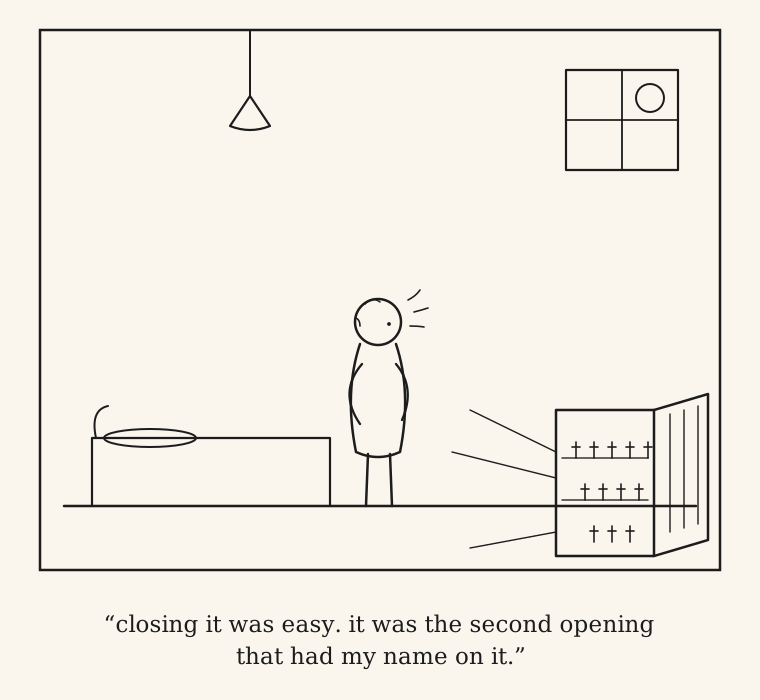
I think about that scene because of my father.
He was a special agent for the DEA in Boston in the seventies and eighties. First in his class at Quantico. A master's degree in genetics. He taught himself Fortran and Pascal when programming was still sorcery. He was funny and clever and, by every account I have gathered, not a bad man. He was also an alcoholic, and in 1988 he was arrested with two automatic pistols after holding his ex-wife in a house for three hours, threatening no one but himself. The Boston Globe ran the story with a photograph. Three large Boston cops and my father among them, and the camera caught his eyes at the exact moment a man understands his ledger. Two wives gone. Two children gone. The job gone. The eyes in that photo say what the mouth never managed: I am an alcoholic.
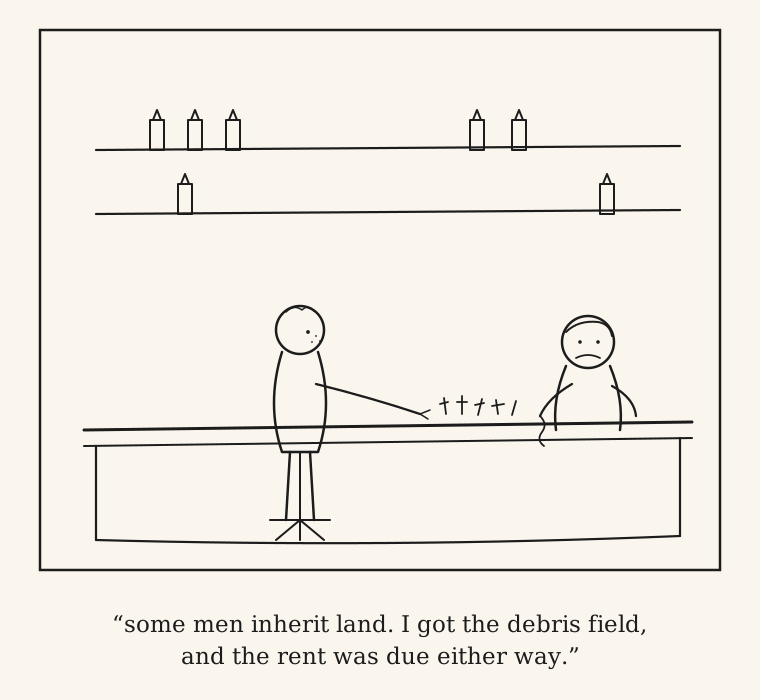
Investigators use the term debris field for the fragments scattered when something is destroyed. My father made one. He also inherited one. His own father emptied the house and vanished when my father was a year old, leaving a woman and an infant in the wreckage. He carried that abandonment his whole life and treated it with the only medicine he trusted. Twelve rehabs, Betty Ford among them, and none of them held. He died of liver failure at forty. The drug war's own soldier, killed by the one legal substance on the menu.
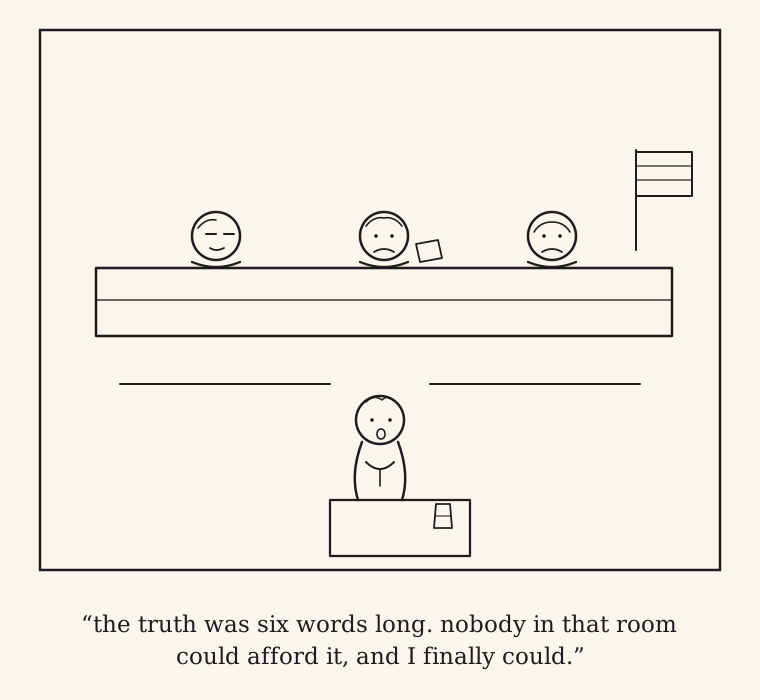
Which brings me back to the film, and its final scene, the one I cannot stop running. Whitaker sits before the federal hearing. One more lie will save him. He has told a thousand. He shifts in his chair, and then he stops, and he tells the truth instead: that he is drunk at that very moment, because he is an alcoholic. It costs him everything and it is the first free act of his life. The movie understands that for a certain kind of man, the truth is harder than landing an inverted jet.
My father stood in a courtroom once, after the arrest, with his own version of that moment available to him. The sentence was four words long. He never said it. I imagine him pausing, taking the breath, saying it out loud to the room. I imagine what forty-one might have looked like.
That is why Flight matters. Not the crash, not the effects, not even Washington's performance, though it is the finest of his career. It matters because it shows the door of the mini fridge opening the second time, and it does not look away, and then it shows a man saying the four words. Some men get the scene. Some men only get the fridge.