Furious
filmfamilyessayI watched Boyz n the Hood as a teenager and I thought I understood it. That is the reliable thing about being a teenager. I thought it was a movie about violence. About Ricky in the alley, about Doughboy in the yard, about a neighborhood where the helicopters never leave. It hit me the way a movie hits you at that age, which is to say completely and inaccurately. I carried it around for thirty years believing I knew what I was carrying.
Then I watched it at forty five, a father of three, and discovered I had never seen it before.
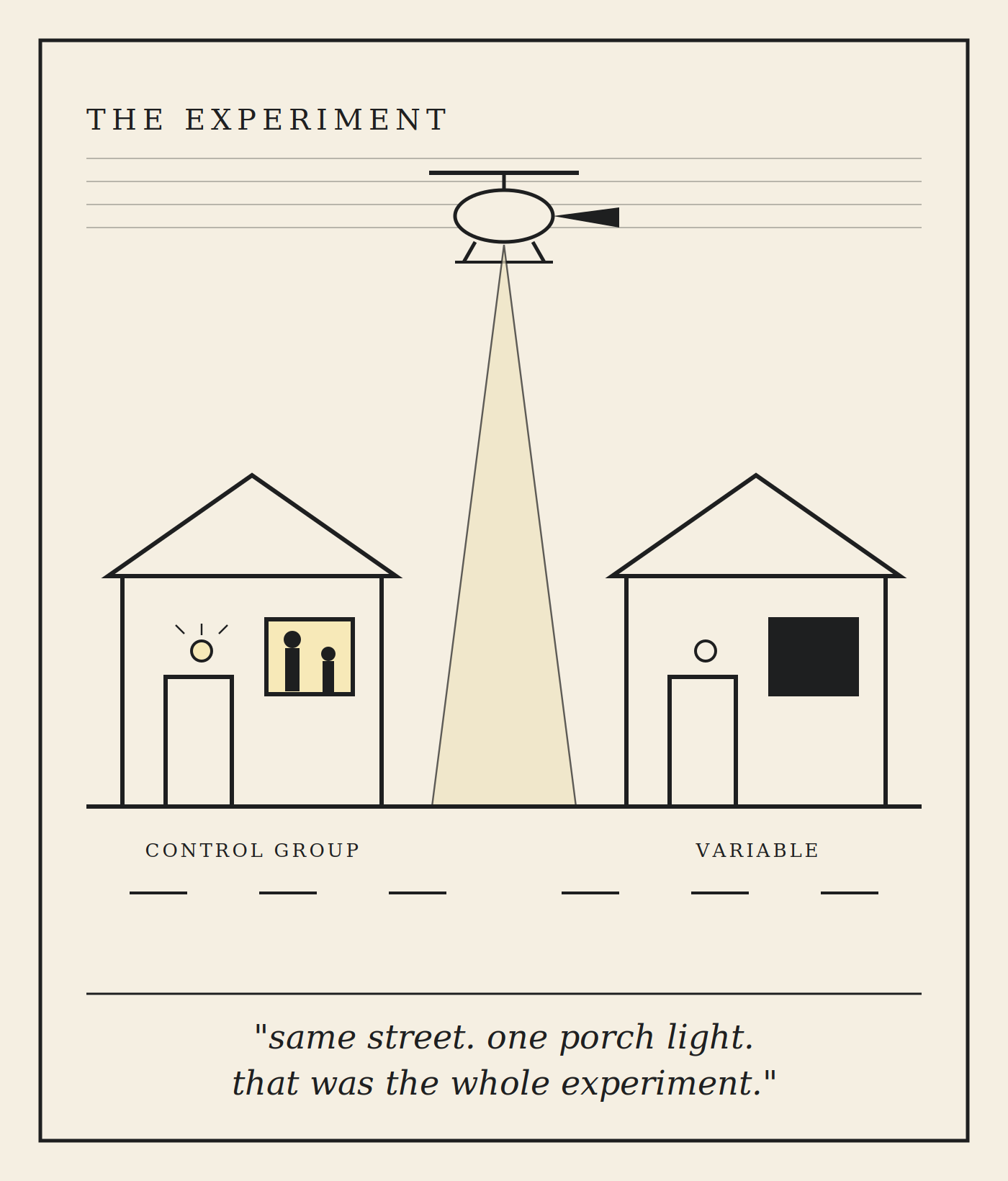
The movie is about fathers. It was always about fathers. Singleton put it in the first act and I looked straight through it for three decades. Reva drives Tre across town and hands him to Furious because she knows what a boy without a man in the house becomes, and she loves her son too much to find out. That is the whole plot. Everything after is the thesis playing out. Ricky and Doughboy live across the street with no father, and the film follows the two houses like a controlled experiment. One boy gets Furious. Two boys get the street. Singleton was twenty three when he wrote it, and he knew it the way you know a thing that happened to you.
My childhood was unorthodox in the ways that never make the news. My parents divorced when I was two. My father died when I was ten. He lived in Dorchester and we lived in Hingham, and so before I could name it I was running my own version of Singleton's experiment, twenty miles and one expressway apart, shuttled between two answers to the question of what a life is. I did not know then why my father lived where he lived. I have a better idea now. I go to a meeting every week, and I pick neighborhoods where nobody looks like me, because I feel more welcome there. That is a different essay. I will say only that the Irish and that community are not strangers to each other. Not an analog. They touch.
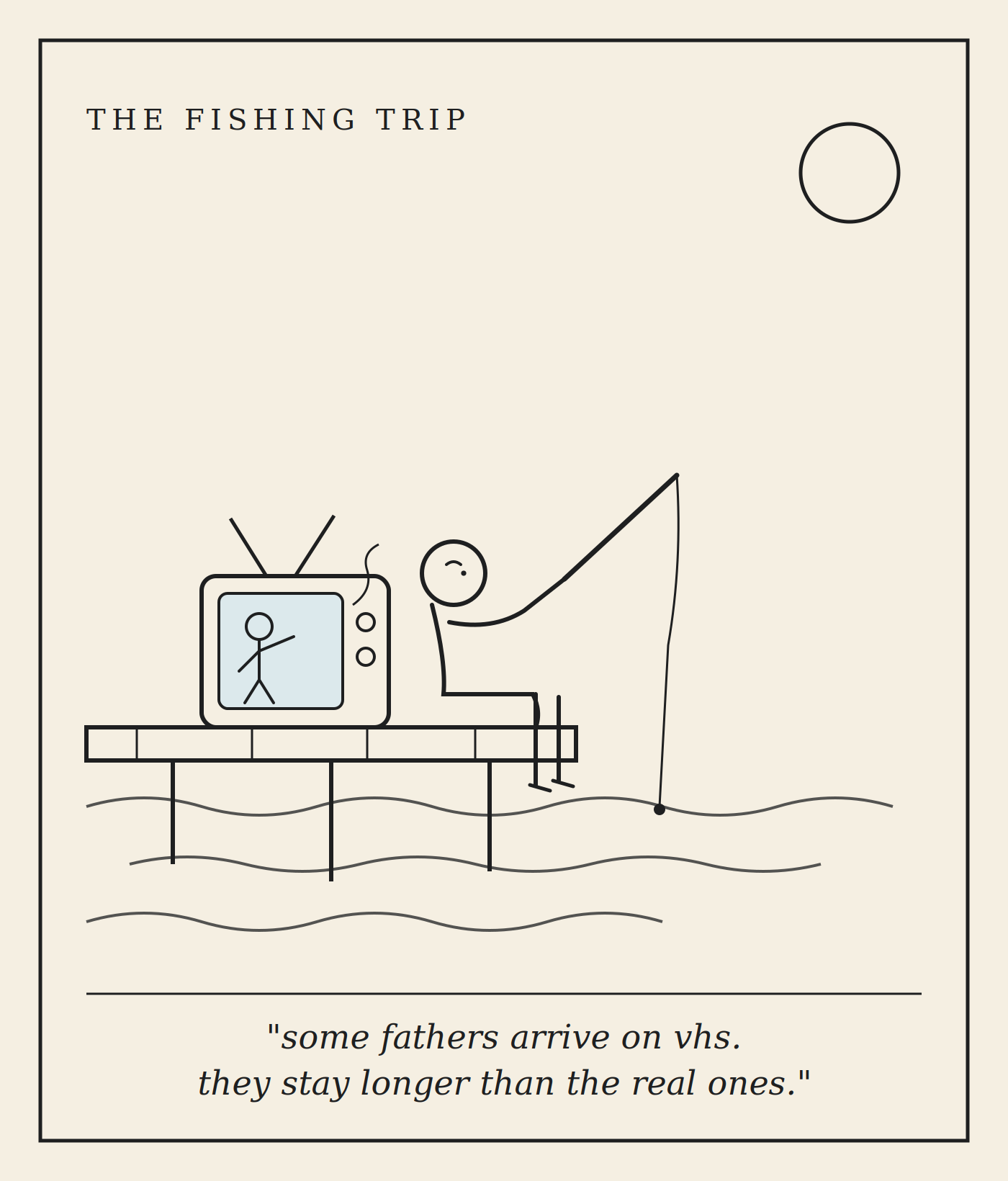
So when Laurence Fishburne took his son fishing, when he lectured him about interest rates and gentrification, when he said that anyone can make a child but raising one is the work, I sat there at fifteen absorbing instruction that was not addressed to me, from a man who did not exist, in a neighborhood I had never seen. Nobody tells you that sometimes a movie is doing a job your actual life has left vacant. Maybe that is why I misfiled it as a movie about violence. The father material went in too deep to register as theme. It went in as instruction.
And there was the money. We were not poor. Poor is its own country and I never held its passport, though I had seen its border towns on visits to my father. We were the class Barbara Ehrenreich named when she wrote about the fear of falling. Above the line but never far above it. Close enough to hear the water. The film knew this economics cold. Ricky needs a 700 on the SAT. One number, one ticket, one exit. When you grow up on the ledge you recognize other people on the ledge, whatever color they are.
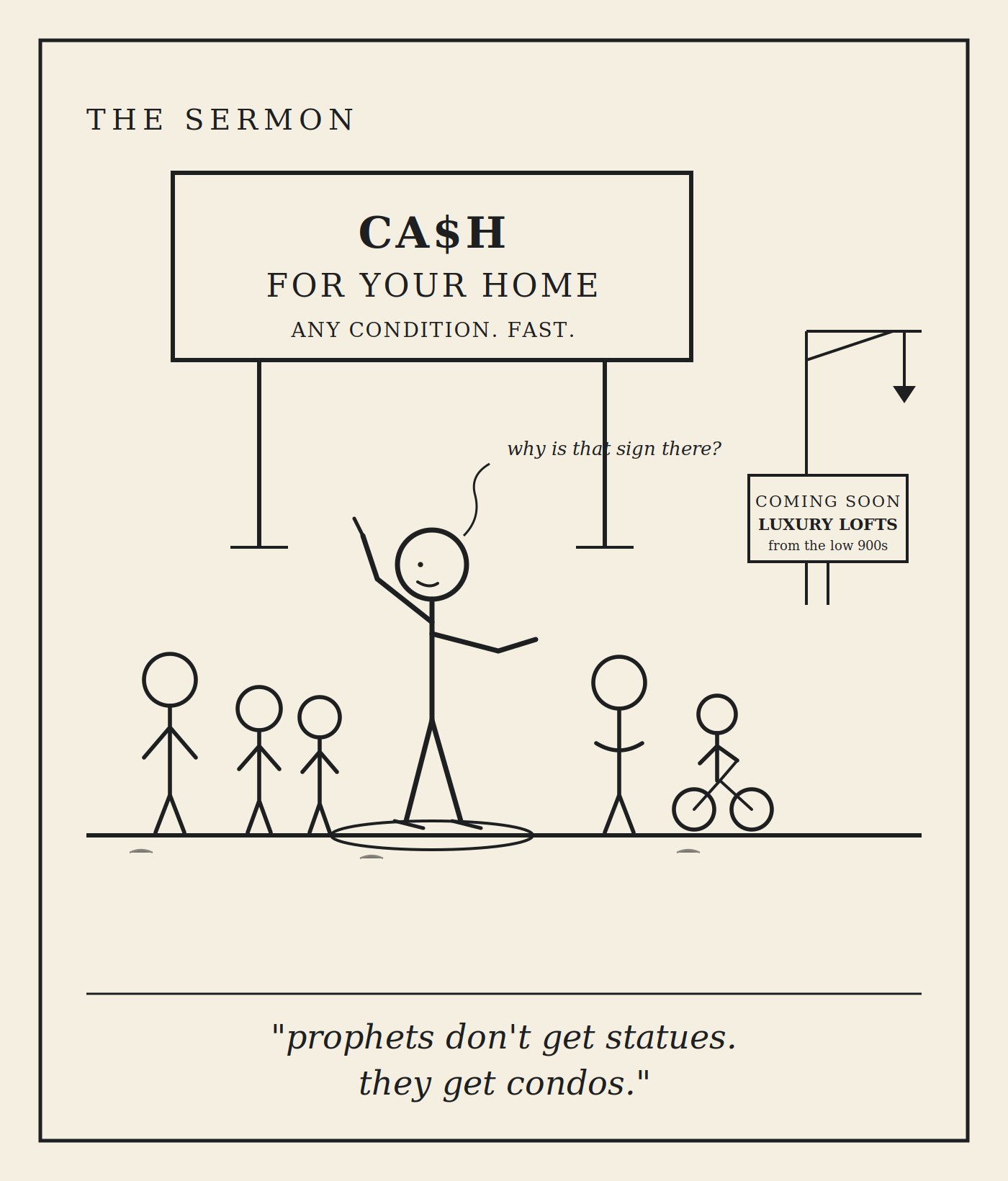
Here is the part I am supposed to soften and will not. What I felt for the world Singleton showed me was respect, and respect is not worship. The polite white position on Black culture is a kind of kneeling, and kneeling is a way of not looking someone in the eye. Singleton looked. His film is a love letter that reads like an indictment. He indicts the fathers who leave. He indicts the boys who confuse a gun with a spine. He indicts the city that sends helicopters instead of jobs. He loved that world enough to tell the truth about it, which is the only kind of love worth the name. Sentimentality is just contempt wearing a nicer shirt.
At fifteen I watched the film as Tre. At forty five I watched it as Furious, and it wrecked me in a different place. I have two boys and a girl, twelve, ten, and eight, stacked so close that people count on their fingers when I tell them. My middle child is ten. Ten is the age I was when my father died. You do not rewatch anything innocently after that. Every scene I had remembered as background was now the foreground. The fishing trip. The porch lecture. Furious sitting his son down after the boy runs off with a gun in his waistband, not yelling, just waiting him out, because he knows the argument he is having is with the whole street and he cannot afford to lose it. I know that argument now. I know what it costs to keep making it on the days you would rather not.
Singleton died at fifty one. A stroke, far too early, and I will call it what it is, a tragedy, without the modern reflex to qualify it. He made other films, some good ones, but he never had to. Some artists produce one thing and the one thing is complete. John Kennedy Toole wrote A Confederacy of Dunces and nothing else, and no one has ever managed to film it, and it needs no help. Toole never even lived to see his book in print. Singleton at least got to stand in the room at twenty three while the world figured out what he had made. That is not nothing. But fifty one is an insult. He was owed thirty more years of watching his movie outlive him.
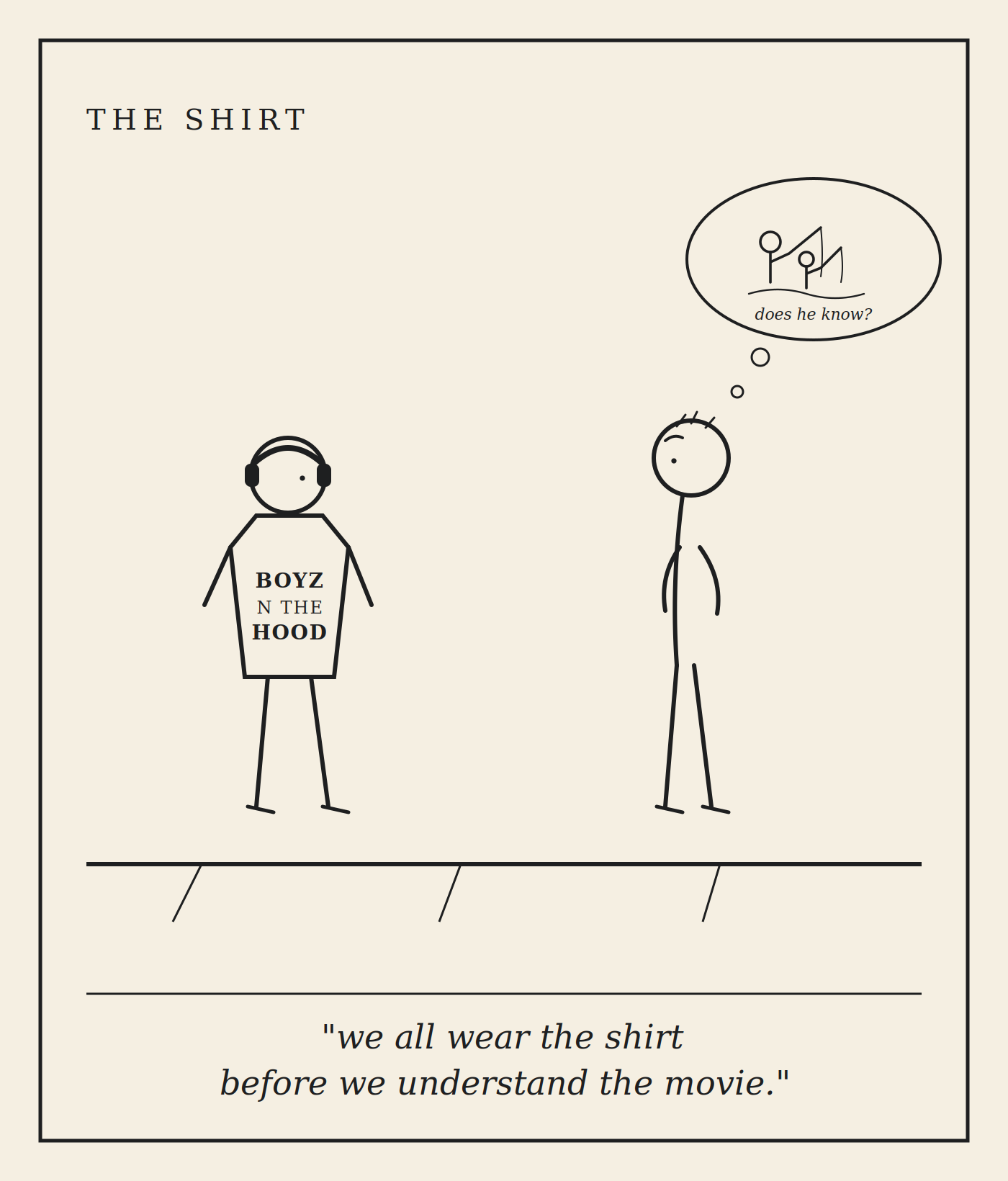
It is outliving him now in a strange costume. Young people wear Boyz n the Hood t-shirts, and I suspect most of them are licensing deals, some trademark office deciding the title has aged into cool. Every time I see one I run the same interrogation in my head. Does this kid love the movie? Does he just like the shirt? Does he know it is about fathers? I never ask. It would be an unfair question, because I wore my version of that shirt for thirty years. I loved the movie completely and I did not know what it was about either. The shirt and I were in the same position. Some things you have to grow into. Some things you have to lose something to see.
He was twenty three when he told me what a father was for, and I was too young to hear it as anything but a movie. It took becoming one to finish watching it. It took losing one to need it in the first place.
Some debts you don't repay. You just acknowledge them, out loud, on the record.
I'm watching it again this week.