Paying the Bill
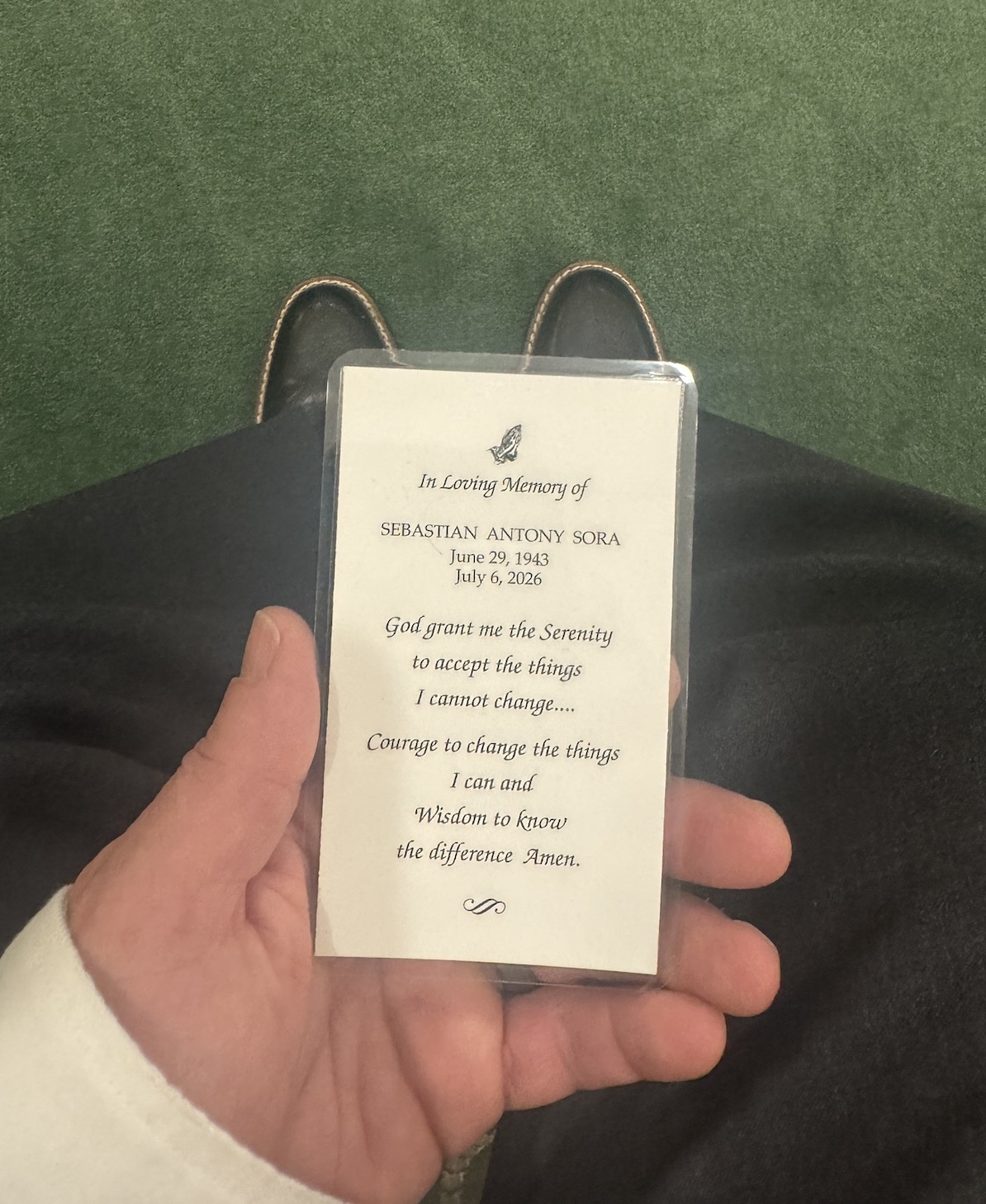
familyphilosophylosslegacyWe put my father-in-law to rest yesterday at St. John's Cemetery in Queens. He lies in a mausoleum, which is a classy way to go. It was cold, climate-controlled, spotless marble. I had never been inside one, and I appreciated the chill. The chapel mausoleum looked surreal, something out of the Star Chamber, or out of Star Trek. It had a real science-fiction feeling, like a passageway, a portal. Then the priest came out, and his name was Michael Sebastian, which seemed absolutely perfect. Sebastian was a huge science fiction fan, and this felt like the best way to walk through that passage, wherever we go.
Sebastian was in the Navy, among other things. As we approached, I had my three children with me, my wife, my extended family. Two men from the U.S. Navy came, and one of them carried a trumpet. Then it hit me. He was getting a military funeral. I wasn't prepared for it, and I had never seen one.
They played taps. They folded the flag. They were professional, thoughtful, precise. The only thing binding those two sailors to my father-in-law was ritual and respect, and it was a beautiful thing to watch, especially for my kids.
When taps played, my youngest son, also a Sebastian, began to cry. That set me off too. Something about those trumpets. Look up the history of taps sometime; it is worth five minutes of your day.
Afterward we drove to his favorite restaurant in White Plains, Milano's. I had been there maybe five times in my life, for an engagement party, for birthdays, for anniversaries, and now, probably for the last time, to honor Sebastian Sora.
Sebastian always ordered the cold seafood tower. It ran into the hundreds, and he would order more than one. I never saw him take a bite, and if he did it was small enough to miss. The tower was never for him. It was for everyone else. The first time, at my engagement party, my sister leaned over when it landed on the table and whispered, "a man after my own heart." It is a beautiful memory.
When the bill came yesterday, I watched my brother-in-law sign the receipt. He is a good man, a thoughtful father of four, a hard worker. But something in me said Sebastian is paying for this. He always paid the bill. Something tells me he planned this dinner weeks ago, months ago, maybe years ago, and knew he would settle the final one. That was the thing about Sebastian. He paid his bills.
On my walk this morning I was thinking about people who pay their bills.
My grandfather abandoned my father and my grandmother, Teresa Kenny. Teresa worked in the courts. My father was an infant. She came home one day to their place in Belmont, Massachusetts, and found the whole apartment cleaned out. Limited income, little education, a devout Catholic, she raised my father alone.
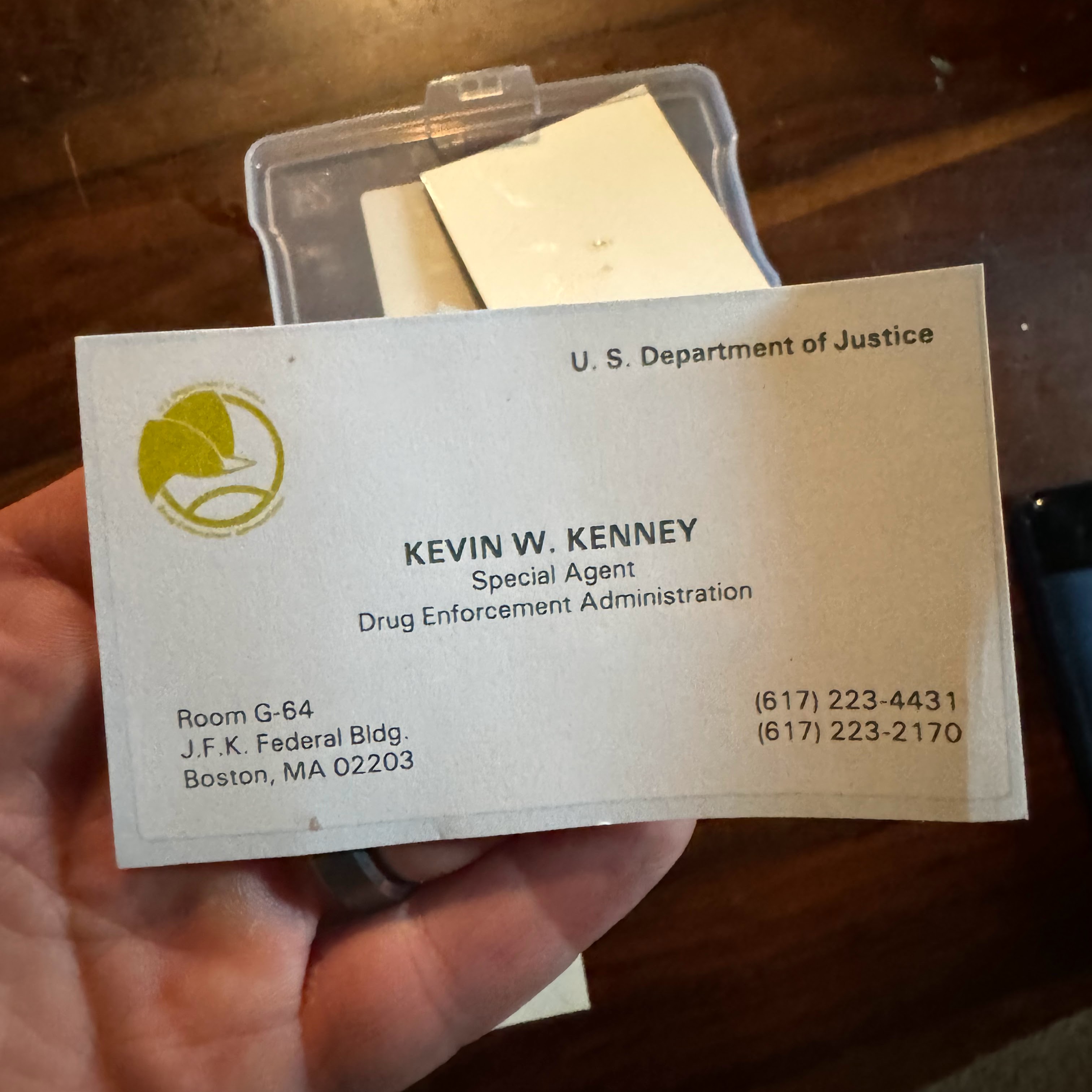
I will write a proper piece about my father someday. He was a man of contradictions, conflict, and considerable intellect, and he reminded me of Seb. I wish they had met; I think they would have hit it off. He was a self-taught Pascal and Fortran programmer who became a special agent for the DEA, brilliant and loved by his colleagues. He took an undergraduate degree in microbiology from Boston University and a master's in something to do with genetics, I never learned exactly what, from Stony Brook, out on Long Island. My mother used to tell us, when we were kids, that we would probably live in Washington, D.C., and have a wonderful life, if only my father could have stopped drinking.
He died at forty, in 1990, when I was ten. His death did not reach me until ten, maybe fifteen, years later. I did some deep research on him, and things went downhill after that. I found his ex-wife and learned he had been through twelve rehabs, so I am not too angry with him. He tried twelve times. Sometimes you cannot beat genetics. You cannot beat the bug, and that is all right. I have had my own troubles with depression and substance abuse. I had a bad 2025. I will leave that there.
And this got me thinking about paying bills. You can cause a ruckus. You can trash a hotel room. You can go out to an expensive dinner. But you have to pay the bill. Who pays the bill? Sebastian always paid the bill.
My grandfather left a mess and never paid. My father left a bigger one, a great deal of destruction, to put it lightly. Five foot five, made of twisted Irish steel, a wrecking ball in a small frame. Small and Irish and carrying something he never set down. He hurt two women, both his wives, and his children, and never grasped the damage he had done. He never paid the bill.
Dr. Sebastian Sora paid the bill.