Truing the Wheel
politicsessaysystemsPart One
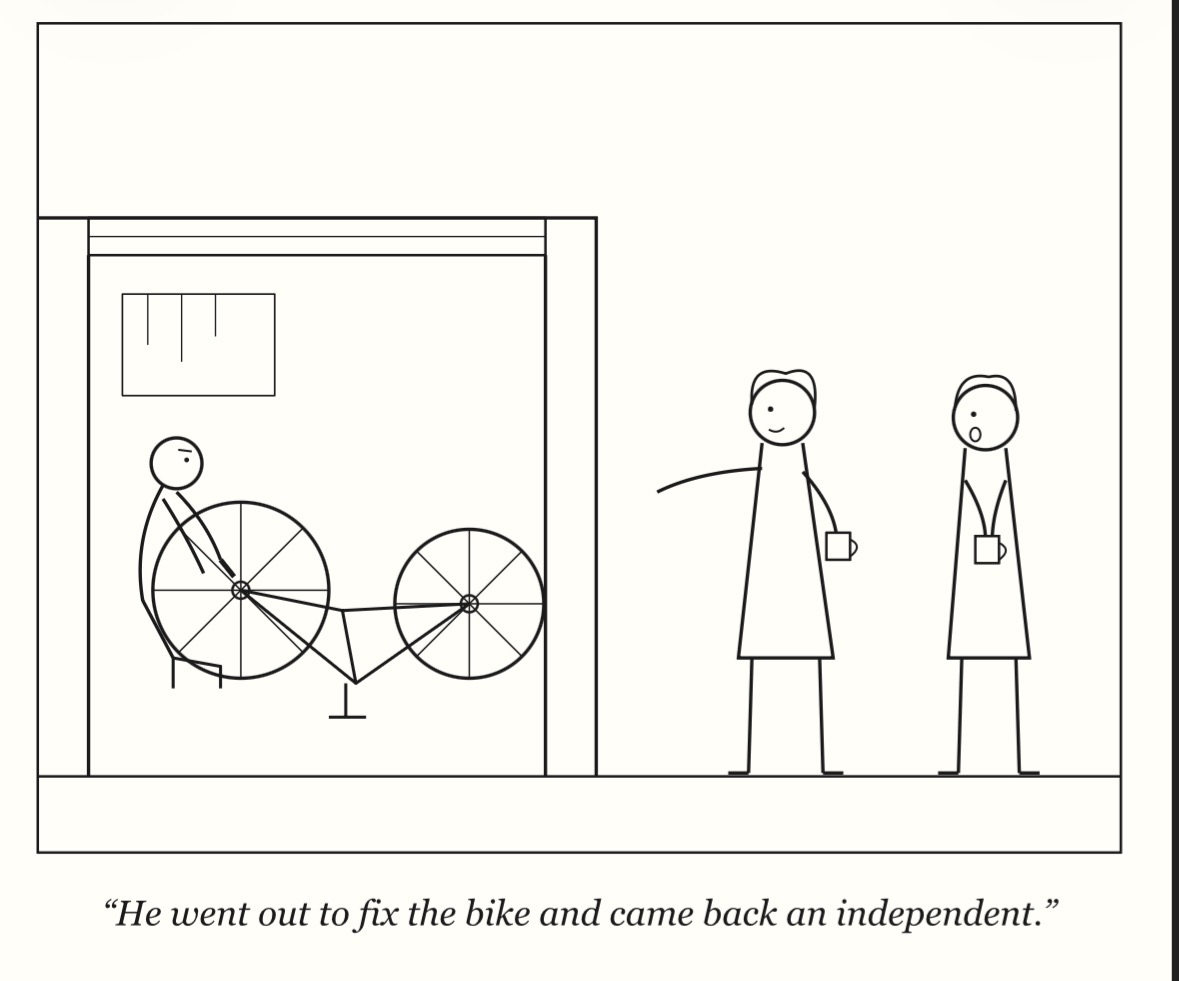
This essay began in my garage, with a bicycle upside down on its handlebars and a wheel that would not run true.
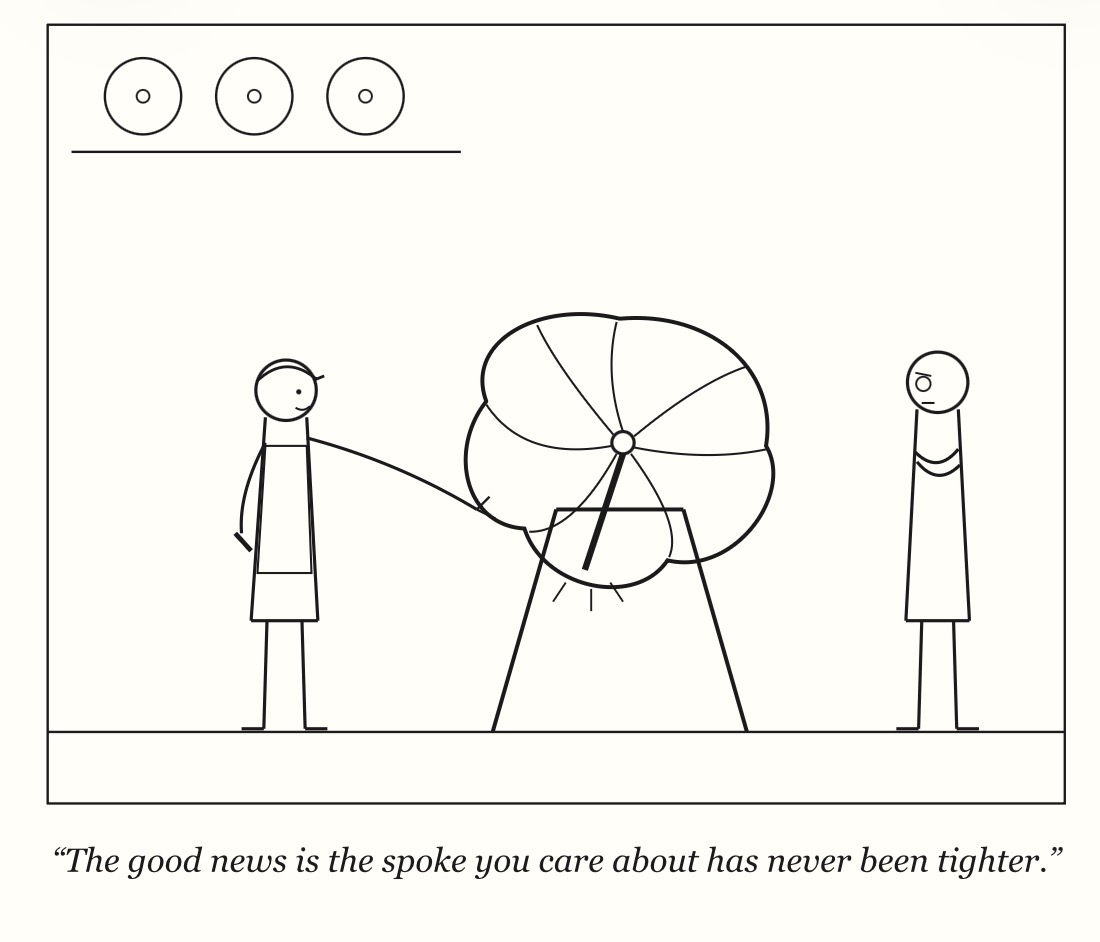
If you have never trued a wheel, here is the education. A bicycle wheel is not held up by the spokes beneath the hub. It hangs from the spokes above it. Thirty-two thin wires in permanent argument, each one pulling against all the others, and the rim stays round only because the argument is balanced. So you find the wobble, and you find the loose spoke, and you tighten it. And the wobble moves. Tighten again and it moves again, three spokes down, mocking you. You cannot fix one spoke. You can only adjust the whole conversation.
I was a quarter turn into my third spoke when something entirely unrelated clicked into place, and I stood there in the garage holding a spoke wrench, having just understood why I left my political party.
Some background, so you know I am not a tourist here. I spent eleven and a half years consulting for some of the largest companies in the world, Fortune 500 names in every industry, product, and service you can think of, on how ideas move through an organization: how you collect one, what you automate, where the flow jams, why the system fails. Two hundred and fifty of them. Spy agencies, sneaker companies, banks, school districts, a nonprofit for the elderly, men who pour concrete. The failure is almost always the same. Someone fell in love with one component.
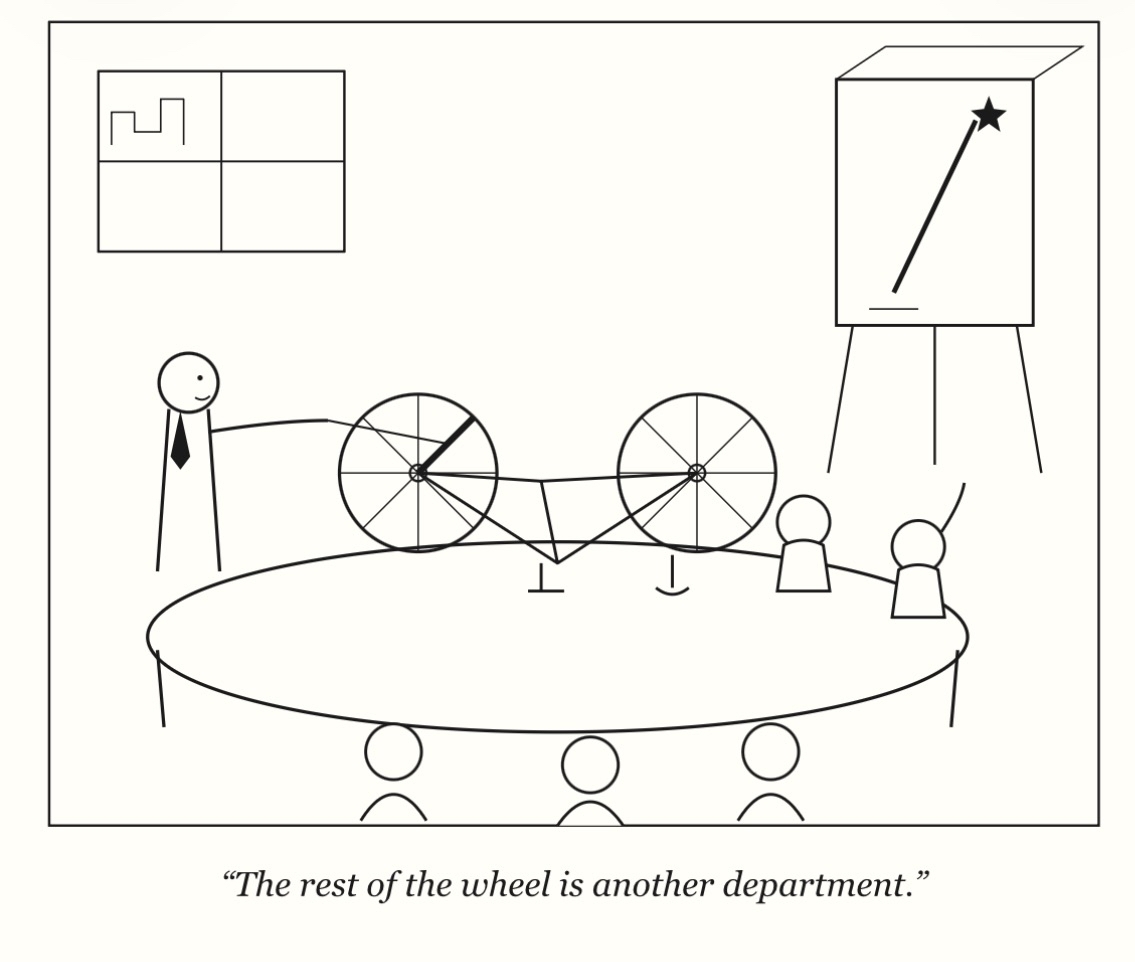
You learn to spot it fast. A director stands at a whiteboard and points at his favorite spoke. The spoke is beautiful. The spoke is the future. He has charts about the spoke. Ask him about the other thirty-one and he blinks. Ask him what happens to the rim when he cranks his spoke down and he says that's another department.
I have a degree in this. Decision and Information Sciences (a business core with computer science electives; essentially a nerd who can talk to women), which is a grand way of saying I studied how parts become wholes and how wholes punish you for ignoring the parts. Then twenty years in corporate America watching the punishment administered, quarterly, without mercy.
Here is the confession. For all of that time, from the day I turned eighteen until about six months ago, I belonged to a political party, and I never once ran the audit on it. I ran it on everyone else. The client got the hard questions. The party got my signature.
Then came the garage, and the wheel, and the wrench. I looked at my own side the way I look at a client. Not with anger. With a clipboard. And what I found was the director at the whiteboard, pointing at the beautiful spoke.
The policies were not evil. That's the lazy version and I won't write it. The policies were single-spoke. An intervention gets made at one point on the rim because that is where the wobble is visible and the suffering there is real. What the rest of the wheel does when you crank that one spoke was never on the agenda. The intention is decent and the thinking ends at the first box.
I should say the other side has its own disease, and it is not a small one. That is its own essay; this one is about my house, because I lived in it for twenty-eight years and I know where the wiring is bad.
Part Two
Audit one. Rent control.
The loose spoke: the rent. The rent is visible. The rent arrives monthly and the suffering it causes is real and photographable. So crank it down.
The finding is old enough to have tenure. Cap the price of housing and you change the tension in every other spoke on the wheel, which is to say the behavior of everyone who supplies housing. Buildings convert to condos. Owners stop maintaining what they cannot reprice. Developers, who can read, build elsewhere. The economists agree on this the way they agree on almost nothing. Assar Lindbeck, a Swedish social democrat, said rent control was the surest way to destroy a city short of bombing it. The diagram was available. It was one box longer than the one they used.
The tenant in the capped unit wins. His spot on the rim runs true. Everywhere else the wobble grows: the family that will never find a vacancy, the neighborhood where nothing gets built. In a client report I would write: intervention optimized for the visible stakeholder at the expense of the system. Recommend redesign. There is no redesign. There is a ballot measure to crank harder.
Audit two. Student debt.
The loose spoke: the balance. A number on a screen attached to a twenty-six-year-old, and the number is obscene, and the impulse to zero it out is humane. I felt the impulse. I signed for it.
But the balance is the wobble, not the spoke. The cause is tension somewhere else on the wheel, in the pricing mechanism. Tuition rose the way anything rises when the buyer is eighteen, the money is guaranteed, and the seller faces no consequence for what the degree is worth. Forgive the balance and you have not turned one spoke nipple on that wheel. You have grabbed the rim with both hands and bent it straight, and anyone who has ever tried that on a real bicycle knows what happens next. It springs back. Worse, you have told the machine its output will be periodically absorbed, which is an instruction to produce more of it.
A systems person asks the boring question. What does the university do the day after forgiveness? Raise tuition. What does the lender do? Lend. What does the next eighteen-year-old do? Sign. The policy addressed the one component with a constituency and left the tension of the whole wheel exactly as it found it, primed to throw the same wobble, larger. In the report: symptom remediation without root cause analysis. The client would fire us for this.
Audit three. The city that votes for outcomes and against mechanisms.
This is the big one because it is not a policy. It is a pattern, and you can watch it run in any deep blue city with a housing crisis.
The stated goal: affordable housing. The mechanism that produces affordable housing: building housing. Lots of it, dense, near transit. And here the same voters who march for affordability show up to the planning meeting to kill the apartment building. It will change the character of the neighborhood. It casts a shadow. The developer will profit, and profit is suspect, so better that nothing be built and no one profit and the crisis deepen with clean hands.
This is spoke worship in its purest form. Affordability is the component they love. Supply is the hub, the thing every spoke actually connects to, and the hub is another department. San Francisco declares a housing emergency and then subjects a bike lane, of all things, to environmental review. The distance between the goal and the mechanism is the entire wheel, and nobody in the room is looking at the wheel, because the wheel is boring and the goal feels like virtue.
Three audits, one finding. In every case the intervention was made at the point on the rim where the suffering was visible and the applause was available. In every case the rest of the wheel existed, was knowable, was in the literature, and went unread. My clients do this too. The difference is my clients eventually get an invoice from reality. A political party gets a narrative instead. The invoice goes to someone else, later, in a neighborhood no one bothered to draw.
Part Three
The obvious question is why. Why would this party, my party, the party of the professors, the party that says trust the science on its lawn signs, be so bad at the one thing science actually is, which is the study of how things connect?
I have a theory and it is not flattering to anyone, including me.
The left's moral engine runs on the visible victim. This is its glory. It saw the sharecropper, the miner's lung, the child at the fence. It built its entire moral machinery around the act of looking at one suffering person and refusing to look away. I am not being sarcastic. This is the best thing about it, and it is why I joined at eighteen and stayed for twenty-eight years.
But a moral engine built on the visible victim has a design flaw, and the flaw is structural, not incidental. The victim is at one point on the rim. The system is everything else. Compassion aims itself at that point because that is where the face is. Nobody's face is on a spoke. There is no photograph of tension. The family that never finds the vacancy because the building was never built does not know it is a victim and cannot appear at the rally, because you cannot rally around an apartment that does not exist.
So the party cranks the visible spoke, again and again, and calls the wobble that appears elsewhere bad luck or bad actors or insufficient funding. When the wobble is pointed out, the pointing is taken as an attack on the victim, because in this moral grammar the only reason to look past the visible suffering is that you do not care about it. Systems thinking gets read as coldness. The boring question sounds like cruelty. I know because I heard it that way for decades. When someone said what happens to supply, I heard whose side are you on.
Now the mirror, because I promised it and because the essay is dishonest without it. The right does not have this disease. The right has the opposite one, and it may be worse. The left sees the spoke and misses the wheel. The right, at its worst, denies the wheel exists. There is no tension, no structure, no history connecting anyone to anyone, only individuals making choices, and if your rim is bent that is a fact about you. That is not systems thinking either. That is refusing the diagram entirely. A party that stares at one spoke is at least holding the wheel. A party that says the wheel is a myth has left the garage.
Which is how a man ends up where I am, forty-six years old, twenty-eight years of loyalty canceled, standing in the driveway between two houses, neither of which will let him in to true the whole wheel.
Here is what I know from the two hundred and fifty clients. The organizations that survive are not the ones with the best intentions or the best components. They are the ones where somebody, usually somebody unpopular, is allowed to stand at the whiteboard and draw the boxes nobody wants to see. The box where the incentive lives. The box where the money leaks. The box that says here is what this policy does in year five to people who are not in this room.
Politics has no such person. Politics is structurally rigged against that person, because the wheel is round and the election is short, and the applause is always at the one visible spoke.
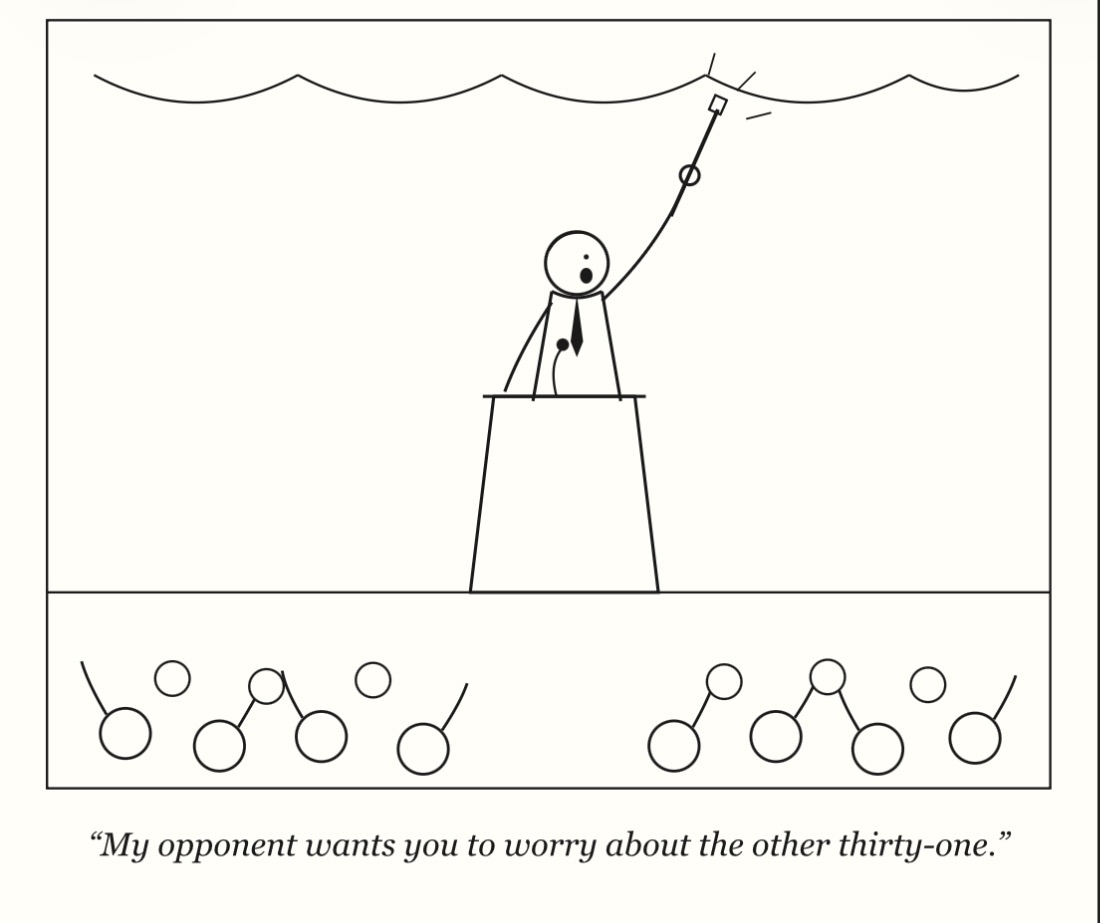
I did not leave the party because I stopped caring about the person at the point of the wobble. I left because I started caring about the rest of the rim, and I could not find anyone in the building who wanted to talk about tension. I am not a Republican. I am not anything. I am a systems man without a system.
The bicycle, for the record, runs true now. It took an hour. Not because any one spoke was fixed, but because all of them, finally, were asked to agree. A quarter turn here bought a quarter turn there. Nothing was cranked. Nobody won. The wheel spins and the rim holds its line, which is all a wheel was ever supposed to do, and which no one has yet promised me from a podium.